
04.09.26
Stories That Want to Be Told
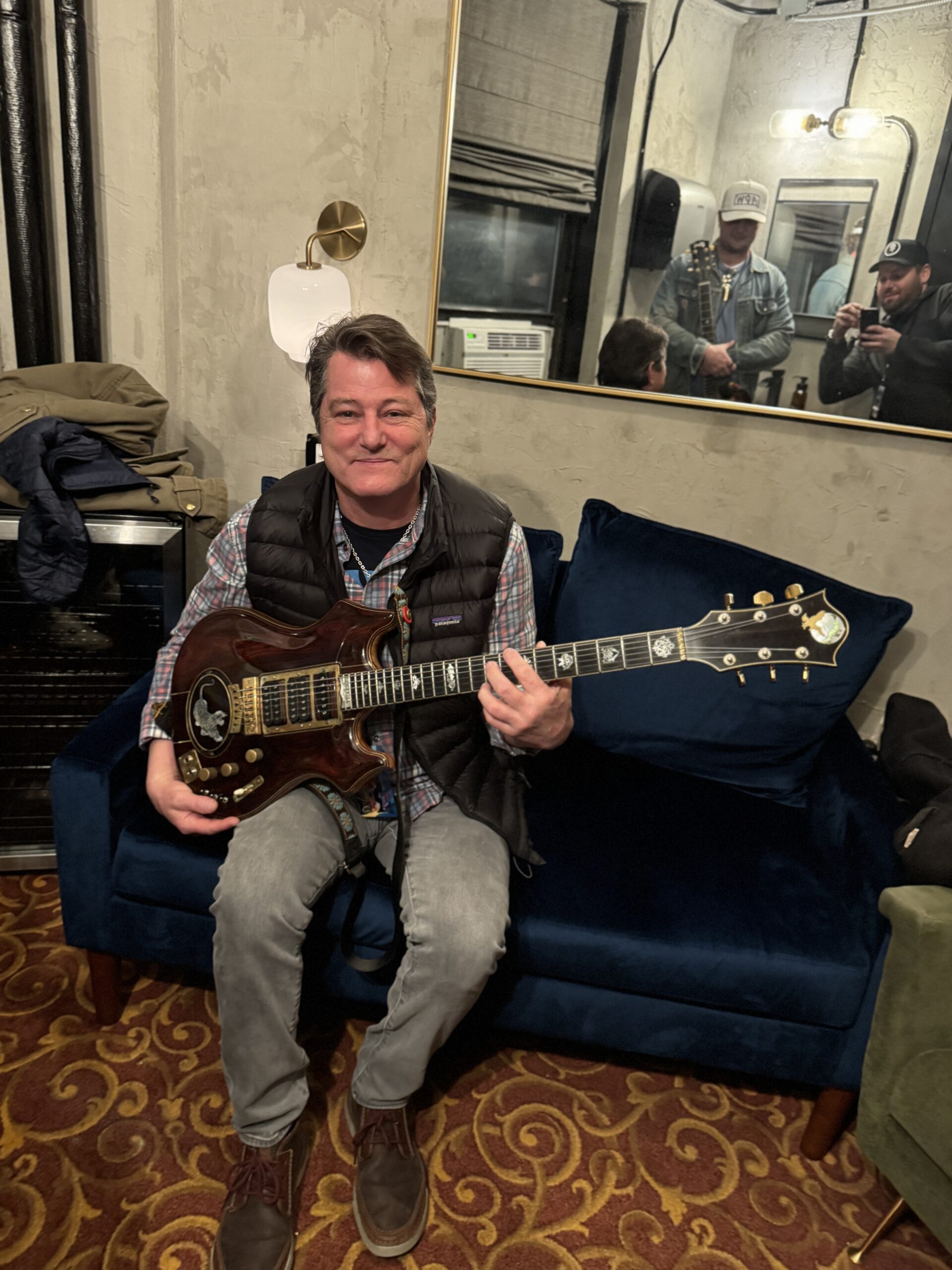
Stories have a way of revealing themselves when you least expect it. Sometimes that moment comes while holding something alive with history, like a vintage guitar.
Not long ago, I had the opportunity to play two instruments that carry incredible creative weight: Jerry Garcia’s Tiger and Frank Zappa’s Baby Snakes guitars. They were radically different experiences. Jerry’s guitar was heavy, almost demanding commitment just to hold it. Frank’s, by contrast, fit like a glove.
But what stayed with me wasn’t just how they felt, it was how they guided me. Each one seemed to pull certain notes out of me, as if the stories embedded in the wood were leading me toward their own voice.
Each guitar carried its own gravity. Tiger had mass and intention – every note felt deliberate. You didn’t rush it, you listened. Frank’s guitar was agile and expressive, inviting experimentation and rewarding detours. Neither was better. They were simply different instruments, shaped by the artists who played them, worn by years of expression, and tuned their own distinct way of “speaking”.
They weren’t hollow. They had opinions. They had memory. And they shaped the music as much as the musician did.
That’s how storytelling works in video.
A strong story isn’t something you impose, it’s something you uncover. The subject, the characters, the setting, the footage, even the silence between moments – they all have a point of view. Some stories want to be told with weight and patience, unfolding slowly and asking the audience to lean in. Others want to move fast, break structure, jump timelines, and surprise you.
When a story is forced, like forcing the wrong notes out of a guitar, you can feel it. The piece becomes stiff. Performative. Empty.
The craft of storytelling is learning to listen before you play.
It’s recognizing whether the story in front of you is heavy enough to demand restraint, or one that invites bold improvisation. Your role isn’t to dominate it, it’s to collaborate with it, to follow where it naturally wants to go, while bringing just enough intention to shape it.
When you get that balance right, the story feels inevitable. The beats land exactly where they should. And like those vintage guitars, the video carries a voice that’s unmistakably its own.
Jamming with Jamie Tedeschi
Stories have a way of revealing themselves when you least expect it. Sometimes that moment comes while holding something alive with history, like a vintage guitar.
Not long ago, I had the opportunity to play two instruments that carry incredible creative weight: Jerry Garcia’s Tiger and Frank Zappa’s Baby Snakes guitars. They were radically different experiences. Jerry’s guitar was heavy, almost demanding commitment just to hold it. Frank’s, by contrast, fit like a glove.
But what stayed with me wasn’t just how they felt, it was how they guided me. Each one seemed to pull certain notes out of me, as if the stories embedded in the wood were leading me toward their own voice.
Each guitar carried its own gravity. Tiger had mass and intention – every note felt deliberate. You didn’t rush it, you listened. Frank’s guitar was agile and expressive, inviting experimentation and rewarding detours. Neither was better. They were simply different instruments, shaped by the artists who played them, worn by years of expression, and tuned their own distinct way of “speaking”.
They weren’t hollow. They had opinions. They had memory. And they shaped the music as much as the musician did.
That’s how storytelling works in video.
A strong story isn’t something you impose, it’s something you uncover. The subject, the characters, the setting, the footage, even the silence between moments – they all have a point of view. Some stories want to be told with weight and patience, unfolding slowly and asking the audience to lean in. Others want to move fast, break structure, jump timelines, and surprise you.
When a story is forced, like forcing the wrong notes out of a guitar, you can feel it. The piece becomes stiff. Performative. Empty.
The craft of storytelling is learning to listen before you play.
It’s recognizing whether the story in front of you is heavy enough to demand restraint, or one that invites bold improvisation. Your role isn’t to dominate it, it’s to collaborate with it, to follow where it naturally wants to go, while bringing just enough intention to shape it.
When you get that balance right, the story feels inevitable. The beats land exactly where they should. And like those vintage guitars, the video carries a voice that’s unmistakably its own.
Jamming with Jamie Tedeschi