
07.09.26
The Beautiful Game
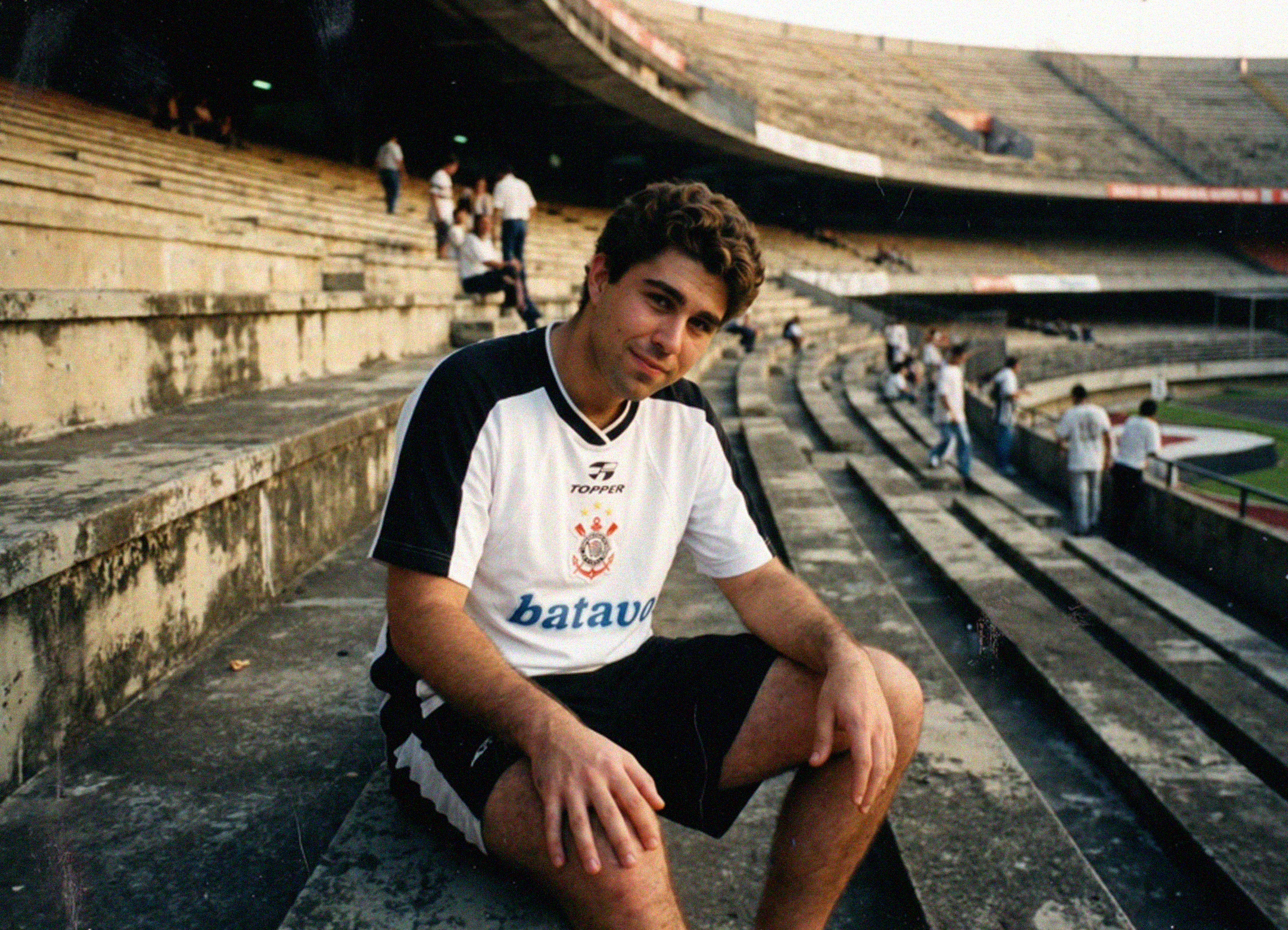
I grew up watching soccer in stadiums – not watching, really, but feeling part of the experience. Concrete bleachers, the smell of smoke and cheap food, and thousands of people around me who weren’t just cheering, they were believing. For ninety minutes, every person in that crowd was there for the same thing: not the win, but the magic. A moment that would stop time. A dribble so daring it didn’t matter if the ball was lost a second later. A pass attempted at the wrong time because it was too beautiful not to try. The kind of play you’d be talking about a week later – not because it decided anything, but because you saw it with your own eyes and couldn’t quite believe it happened. I watched Brazil lift the World Cup more than once. I saw Ronaldo, Kaká – a generation that made greatness look effortless. Now I live in Boston. The World Cup is happening a few blocks from my house. And I’ll be watching from my couch.
But something else has changed, in soccer and in the work I do every day. The game I grew up loving was built around individuals. Not just players – geniuses. Pelé didn’t just score goals; he invented the geometry of a play in real time. These were players whose greatness came from the unpredictable, the improvised, the human.
Today’s elite football is something different. Tactically brilliant, physically relentless, and overly engineered. The system wins now. And the individual genius and the dangerous dribbles get coached out early. The game is more efficient. It’s also, if you’re honest, a little less alive.
I’m a Motion Designer. And I’ve been watching the same thing happen to my field. AI has arrived, and it’s remarkable. It accelerates production, fills gaps, and solves problems I used to lose hours to. I’ll keep using it, but there’s a version of this future I want no part of: where the craft becomes a matter of prompting the right system – delivering something technically correct, efficiently produced, and forgettable. The risk isn’t that AI replaces designers. The risk is that designers stop playing their own game and become good at managing someone else’s.
So, use the tools. Win with them when you can. But when you feel the instinct to try something genuinely yours, a motion that only makes sense if you’ve spent years thinking about what motion means, a decision that comes from taste and not optimization, don’t give up on that moment. That’s your Pelé dribble. Don’t let the system coach it out of you.
Playing the beautiful game by Rodrigo Philbert (and photo credit)
I grew up watching soccer in stadiums – not watching, really, but feeling part of the experience. Concrete bleachers, the smell of smoke and cheap food, and thousands of people around me who weren’t just cheering, they were believing. For ninety minutes, every person in that crowd was there for the same thing: not the win, but the magic. A moment that would stop time. A dribble so daring it didn’t matter if the ball was lost a second later. A pass attempted at the wrong time because it was too beautiful not to try. The kind of play you’d be talking about a week later – not because it decided anything, but because you saw it with your own eyes and couldn’t quite believe it happened. I watched Brazil lift the World Cup more than once. I saw Ronaldo, Kaká – a generation that made greatness look effortless. Now I live in Boston. The World Cup is happening a few blocks from my house. And I’ll be watching from my couch.
But something else has changed, in soccer and in the work I do every day. The game I grew up loving was built around individuals. Not just players – geniuses. Pelé didn’t just score goals; he invented the geometry of a play in real time. These were players whose greatness came from the unpredictable, the improvised, the human.
Today’s elite football is something different. Tactically brilliant, physically relentless, and overly engineered. The system wins now. And the individual genius and the dangerous dribbles get coached out early. The game is more efficient. It’s also, if you’re honest, a little less alive.
I’m a Motion Designer. And I’ve been watching the same thing happen to my field. AI has arrived, and it’s remarkable. It accelerates production, fills gaps, and solves problems I used to lose hours to. I’ll keep using it, but there’s a version of this future I want no part of: where the craft becomes a matter of prompting the right system – delivering something technically correct, efficiently produced, and forgettable. The risk isn’t that AI replaces designers. The risk is that designers stop playing their own game and become good at managing someone else’s.
So, use the tools. Win with them when you can. But when you feel the instinct to try something genuinely yours, a motion that only makes sense if you’ve spent years thinking about what motion means, a decision that comes from taste and not optimization, don’t give up on that moment. That’s your Pelé dribble. Don’t let the system coach it out of you.
Playing the beautiful game by Rodrigo Philbert (and photo credit)